Stanford University
Stanford, CA
Program Director: Meredith Barad, MD
Program Coordinator: Ashley Johnson, ashley85@stanford.edu
https://med.stanford.edu/anesthesia/education/fellowships/clinical-fellows/pain_management.html
Clinical Training Strengths
Stanford truly practices interdisciplinary care bringing together faculty from anesthesiology, physical medicine and rehabilitation (PM&R), neurology, and dentistry, along with specialized pain physical therapists and pain psychologists, all housed in the same clinic to provide optimal patient care. We also offer a wide range of subspecialty clinics that allow fellows to gain in-depth experience in focused areas, including headache, orofacial pain, pelvic pain, gastrointestinal pain, spine disorders, and neuromodulation, among others.
Our fellows get to experience working in the Stanford Comprehensive Interdisciplinary Pain Program (SCIPP), a well-established medical-behavioral inpatient unit and the only program of its kind in the western United States.
Procedural Training
Fellows will be trained in a wide variety of procedures from botox for migraine to ultrasound-guided nerve blocks to bread-and-butter medial branch blocks and epidural injections. Additionally, the program offers advanced neuromodulation and minimally invasive spine surgery. Fellows have access to regular simulation labs as well as cadaver workshops with UCSF and Davis that are spaced out over the course of the year. An advanced airway management two-day workshop is offered for learners at all stages.
Faculty and Mentorship
Research and Academic Opportunities
All fellows, as required by the ACGME, participate in a quality improvement project of their interest with a dedicated QI faculty lead. A T32 research opportunity is available for a dedicated research year to help launch a career in pain research. Fellows are also provided funds and time to attend national conferences, and all are encouraged to present.
Career Support and Fellow Outcomes
Fellows get weekly preparation, learning goals, and education to prepare for board examinations, including a practice in-training exam in the spring. Lectures and learning materials are geared toward fellows through an online platform. Alumni share their experiences via “Where are they now?” lectures to help fellows plan for the future. We also have many didactics and interactive workshops focused on developing the soft professional skills that help prepare you for working with a complex patient population. Alumni events are offered at various national meetings, including the North American Neuromodulation Society, American Society of Regional Anesthesia and Pain Medicine, and the American Academy of Pain Medicine. We additionally utilize our broad former fellow network to help fellows find jobs. More than half of program graduates pursue academic or hospital- and health system–based pain medicine positions, about a quarter enter private practice, and a smaller proportion move into leadership or industry roles.
Program Culture
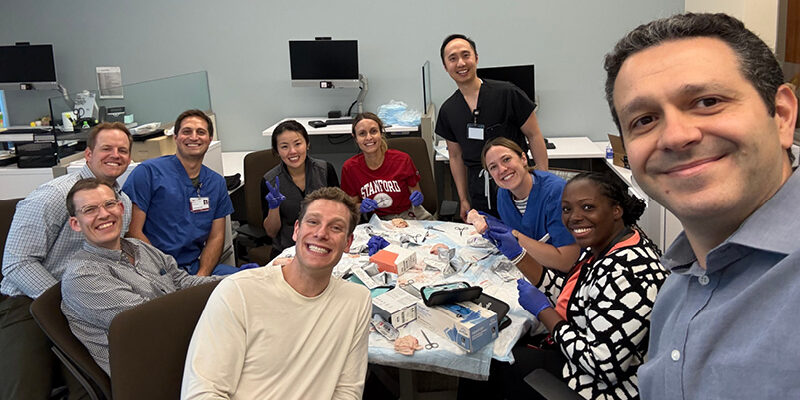
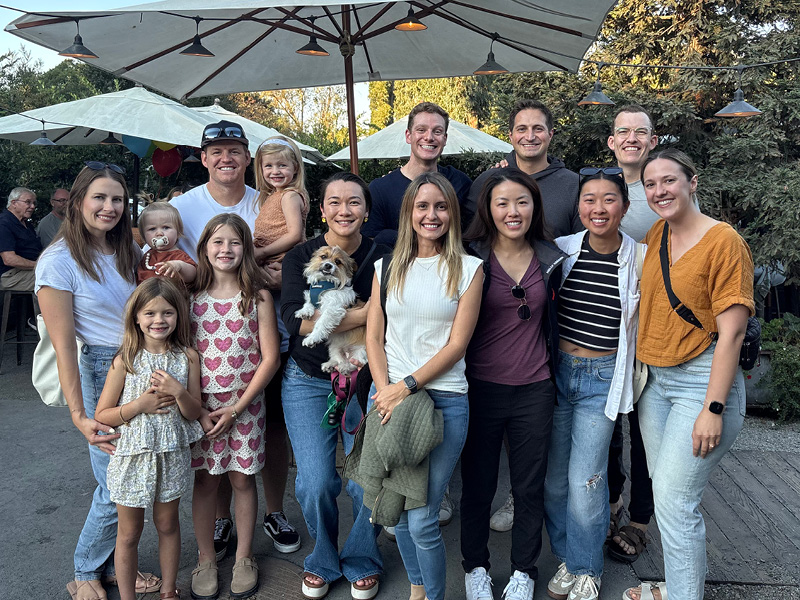
Our culture is extremely collaborative. With a large faculty and subspecializations, the diverse multidisciplinary team members work together to come up with treatment plans in a respectful environment. Fellows often say how hard it is to select only one mentor because all of the faculty are so wonderful to work with. They also love the Bay Area. The weather is gorgeous, the food is amazing, and there is truly something for everyone! Living in the Bay Area is admittedly expensive, but the fellowship salary is one of the highest in the nation.
Signature Features
Our practice model is interdisciplinary and inclusive. We treat a diverse population from a broad expanse of California, as well as patients who seek specialty care and quaternary opinions at Stanford from outside the state. Reflective of this is a diverse faculty and clinic staff. Our program offers various training pathways and programs both within the department and more broadly at Stanford to support fellow interests and career advancement. These can include tracks and training in biodesign, education, and quality improvement, as well as the Leadership in Education to Advance Diversity (LEAD) program for future healthcare leaders. Faculty mentors are available in these and many other disciplines, and the program takes an expansive approach to diversity, equity, and inclusion and its role in advancing pain medicine.