Rush University Pain Medicine Fellowship
Chicago, IL
Program Director: Tolga Suvar, MD
Program Coordinators:
Theresa Orozco; Theresa_M_Orozco@rush.edu https://www.rushu.rush.edu/painmedicine
Alexandra Bernal; Alexandra_Bernal@rush.edu
312-942-6170
Learn about the Rush University Pain Medicine Program here:
Clinical Training Strengths
- Clinical Sites: Fellows rotate across diverse settings including Rush University Medical Center, Rush Oak Park Hospital, the Rush Surgicenter, Rush Oak Brook Surgicenter, Rush Clinic, and affiliated satellite clinics.
- Patient Populations: One of the country’s largest pain centers, providing services to more than 10,000 patients annually across all age groups in both preoperative and non-operative settings.
- Key Pain Conditions/Interventions: Comprehensive, multi-disciplinary management of cancer pain, chronic pain syndrome, complex regional pain syndrome (CRPS), neck pain, diabetic neuropathy, failed back syndrome, postoperative pain, sports injuries, neuropathic pain, and headaches.
Procedural Training
- Hands-on Experience: Extensive exposure to regional nerve blocks, neurolytic techniques, intrathecal drug pump placements, and the implantation of epidural electrodes and pulse generators.
- Advanced Neuromodulation: Full curriculum and training in all aspects of neuromodulation, including spinal cord stimulation (SCS), dorsal root ganglion (DRG) stimulation, peripheral nerve stimulation (PNS), intrathecal drug delivery, and indirect lumbar decompression techniques.
- Cadaver Labs: Features several day-long cadaver training programs specifically focused on neuromodulation techniques held during the early portion of each academic year.
Faculty and Mentorship
- Unique Faculty: Fellows are trained by a highly distinguished, multidisciplinary faculty that includes board-certified anesthesiologists, as well as dedicated leaders from Neurological Surgery, PM&R, and Neurology.
- Learning Environment: Offers a collaborative environment where fellows work side-by-side with attending physicians across academic, community, and outpatient surgical centers.
Research and Academic Opportunities
- Academic Curriculum: Includes structured education on the anatomy and physiology of pain perception, advanced pharmacology (opiates, non-narcotics, NSAIDs, and centrally acting drugs), and principles of acute/cancer pain management.
- QI and Administrative Experience: Fellows gain hands-on knowledge in the organization and management of a pain medicine center, including continuing quality improvement (CQI), utilization review, and program evaluation.
Career Support and Fellow Outcomes
Career Preparation: The comprehensive clinical foundation prepares graduates to transition smoothly into highly specialized clinical practices within private practice, university medical centers, or community hospital settings.
Program Culture
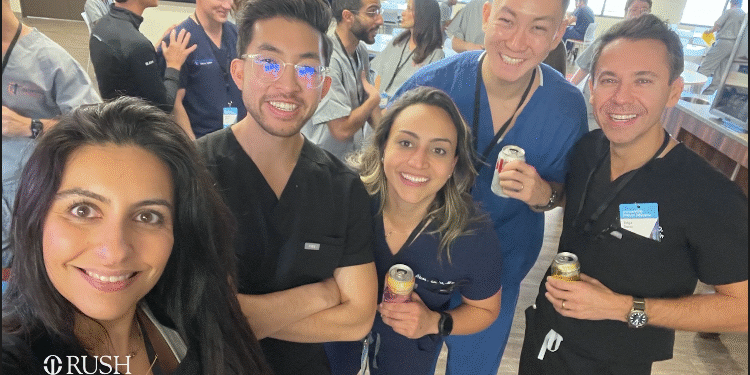
Fosters a multidisciplinary team environment that values collaboration. Training spans across the vibrant city of Chicago and its surrounding suburbs, providing a well-rounded training experience.
Signature Features
It is home to one of the largest pain centers in the nation, combining a high clinical volume with a highly structured neuromodulation, minimally invasive spine curriculum and dedicated early-year cadaver training labs.